
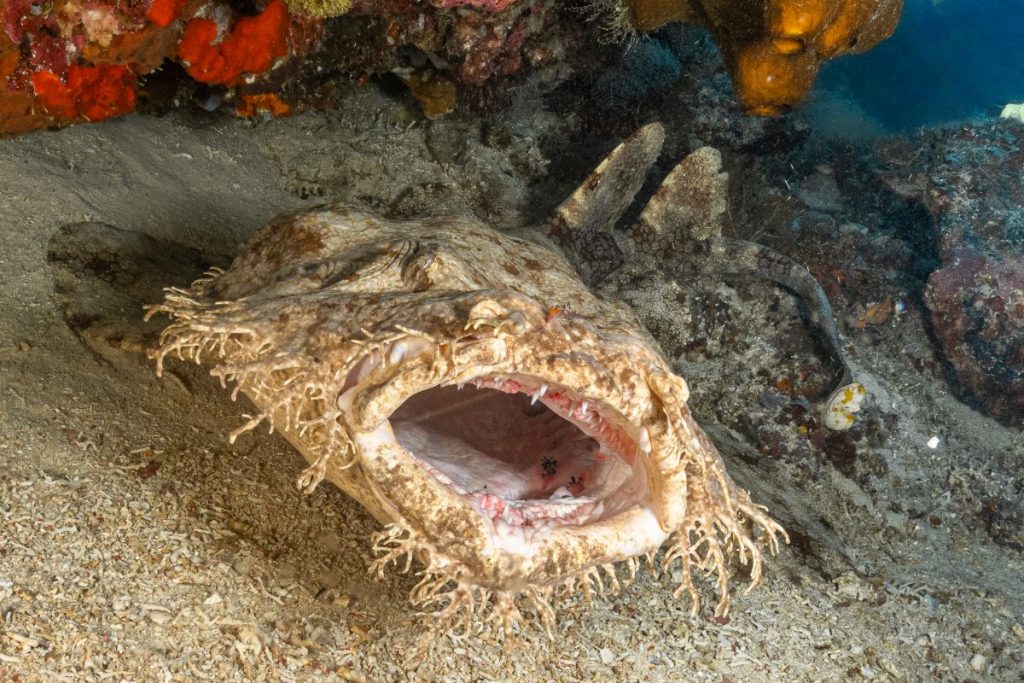
If there’s one shark divers regularly swim straight past, it’s the wobbegong. Perfectly patterned to blend into coral, sand and rock, wobbegongs are masters of disguise – often only giving themselves away with a blink or a subtle shift of a fin.
That is why our guests on Emperor Harmoni were so lucky recently when they were able to swim alongside one of these incredible creatures. Taking their second dive at Yengefo, on the western side of Gam while enjoying our Best of Raja Ampat itinerary, they joined the wobbegong as it elegantly crossed a reef before finding a safe spot to resume its hiding.
They even managed to capture some of the experience on camera – which you can see by visiting our Facebook page.
And it seemed like a great opportunity for us to look at the fascinating animal in more.
So here are some interesting (at least we think they are…) facts about the wobbegong shark:
Their name basically means ‘shaggy beard’.
Wobbegong comes from an Australian Aboriginal word thought to mean “beard,” referring to the fleshy tassels around their mouth.
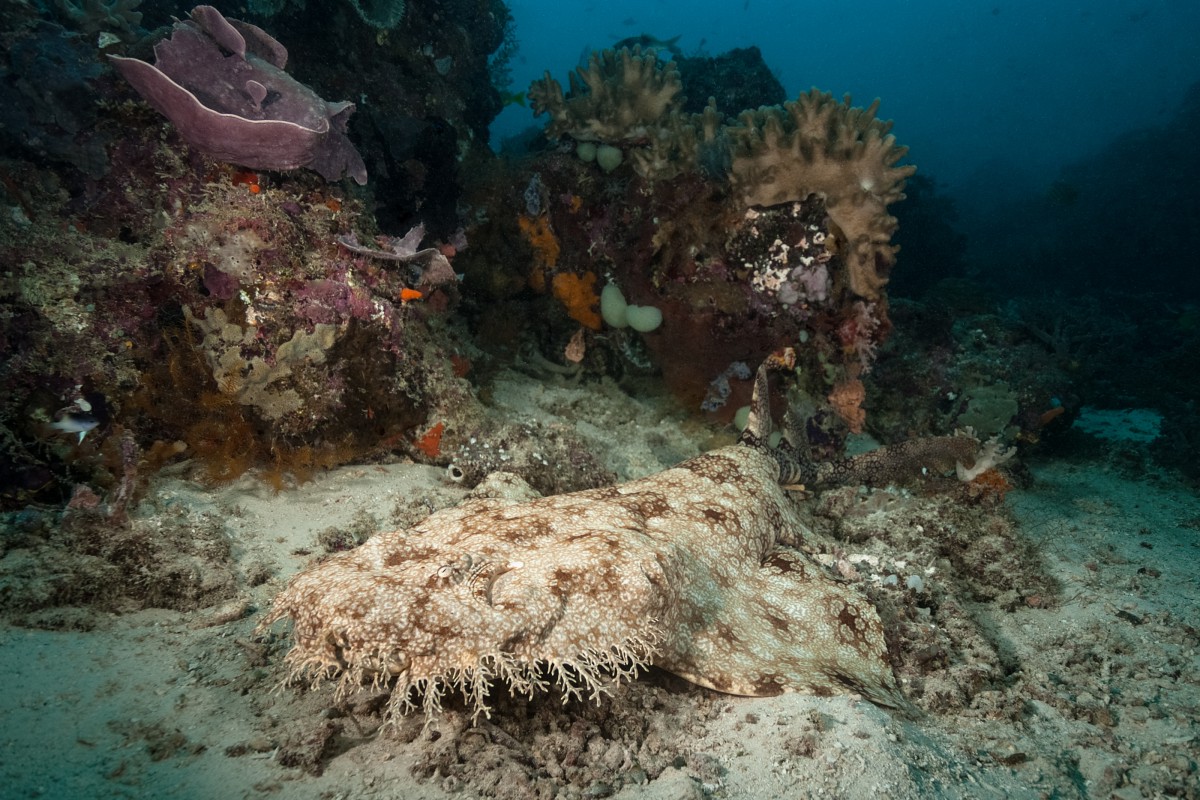
They’re masters of camouflage.
Wobbegongs belong to the carpet shark family, and their blotchy patterns make them almost invisible on coral, sand, or rock. Divers often don’t spot them until they blink.
They’re ambush predators, not chasers.
Instead of cruising around for food, wobbegongs lie still and wait. Fish swim close by, mistake the wobbegong for part of the reef and….
They can eat surprisingly large prey.
Despite looking lazy, wobbegongs have powerful jaws and sharp, backward-pointing teeth. They can even dislocate their jaw to consume larger creatures and have been known to eat octopus, reef fish, and even small sharks.
They’re very relaxed – until they’re not!
Wobbegongs are generally docile and happy to nap all day. However, if they get stepped on or grabbed (normally by accident) they can react fast, they hang on and they really hurt!!
They’re mostly nocturnal.
By day, they lounge under ledges and overhangs. At night, they become more active hunters, cruising slowly along the reef.
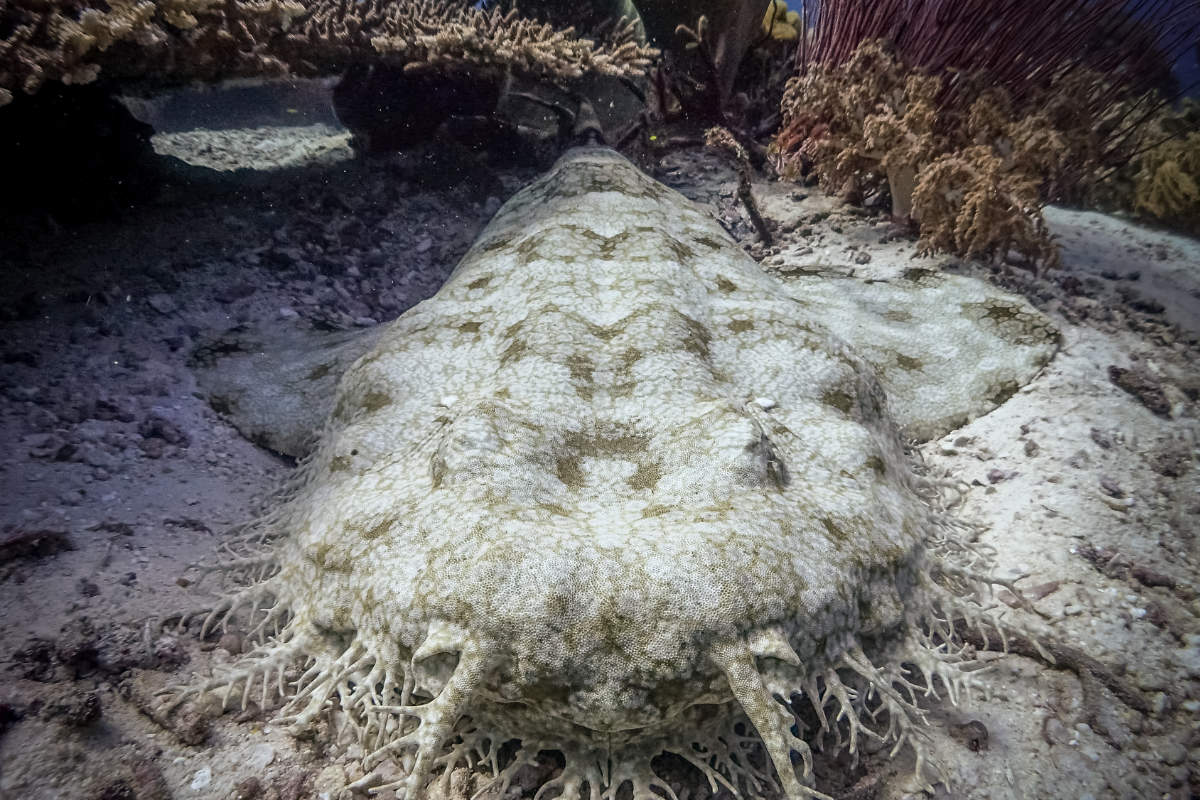
Indonesia is a top place to spot them.
As our Emperor Harmoni guests discovered, Indonesia is a great place to see wobbegong. Our Raja Ampat and Komodo itineraries take divers into really good wobbegong territory. But, we must confess, not the best as most species are found in Australian waters. There are around 12 recognised species, including the tasselled and spotted wobbegong.
They don’t need to swim constantly.
Unlike some sharks, wobbegongs can pump water over their gills while stationary — perfect for a lifestyle that involves a lot of lying around.
They give birth to live young.
Wobbegongs are ovoviviparous: eggs hatch inside the mother, and she gives birth to fully formed pups. No nursery reef required.
They can walk!
Well, sort of. They use their pectoral and pelvic fins to push themselves forward, appearing to crawl along the sea bed. This allows them to move around without blowing their cover.
If you would like more information on where to dive with wobbegong, you can contact our expert team on [email protected] to ask any questions or visit our Indonesia itinerary pages to read more.