

If you’re researching a Maldives liveaboard holiday, you’ll soon come across words like thila, kandu and lagoon. They appear throughout dive site descriptions and itineraries, but unless you’ve dived in the Maldives before, they can sound a little confusing.
The good news is that they’re actually quite simple once you know what they mean. More importantly, they explain why the Maldives has earned its reputation as one of the world’s greatest diving destinations.
Here’s a guide to some of the most common Maldives diving terms and what you can expect to find beneath the surface.
What is a Thila?
A thila is essentially an underwater pinnacle or submerged reef that rises from the seabed without breaking the surface.
Some thilas are small enough to circle during a single dive, while others are large reef systems that could take several dives to fully explore. They often sit within channels where currents bring a constant supply of nutrients, making them magnets for marine life.
Because of this, thilas are often among the most exciting dive sites in the Maldives. Expect colourful soft corals, schools of snapper and fusiliers, hunting tuna, reef sharks cruising past and, during the right seasons, manta rays visiting nearby cleaning stations.
Many of the Maldives’ most famous dive sites are thilas, offering dramatic topography and excellent fish life.
What is a Kandu?
A kandu is a channel or pass between islands and atolls where ocean water flows in and out with the changing tides.
These currents are what make Maldives diving so famous.
As nutrient-rich water is funnelled through the channels, it attracts enormous numbers of fish, which in turn attract larger predators. Grey reef sharks, white-tip reef sharks, eagle rays, tuna and Napoleon wrasse are all regular sights, while manta rays and even whale sharks may also appear depending on the location and season.
Most kandu dives are drift dives, allowing divers to travel with the current while enjoying the spectacular marine life around them.
Current strength varies from day to day, which is why experienced dive guides carefully plan each dive around tidal conditions.
What is a Lagoon?
Every island in the Maldives is surrounded by its own lagoon.
Unlike kandus, lagoons are generally shallow, sandy and protected from strong currents, creating calm conditions throughout much of the year.
While they don’t usually offer the same concentration of large marine life as channels or thilas, lagoons are perfect for:
- Discover Scuba Diving experiences
- Open Water training dives
- Skills practice
- Gentle recreational dives
- Snorkelling
You’ll still encounter plenty of marine life, including stingrays, juvenile reef sharks, octopus, reef fish and turtles, but the emphasis is on relaxed diving rather than fast-moving action.
Why Are Currents So Important?
One thing you’ll quickly notice when reading about Maldives diving is the frequent mention of currents.
Unlike many reef destinations, the currents here are one of the biggest reasons the diving is so spectacular.
As tides move millions of litres of water through the atolls every day, they carry plankton and nutrients that support everything from tiny reef fish to giant manta rays and whale sharks. This constant flow also keeps the reefs healthy and creates ideal conditions for large schools of pelagic fish.
It’s why drift diving has become synonymous with the Maldives – and why experienced guides pay such close attention to tide times when planning every dive.

Other Maldives Diving Terms You Might See
Atoll
An atoll is a ring-shaped coral reef surrounding a central lagoon. The Maldives consists of 26 natural atolls stretching over 800 kilometres, each offering its own unique dive sites and marine life.
Cleaning Station
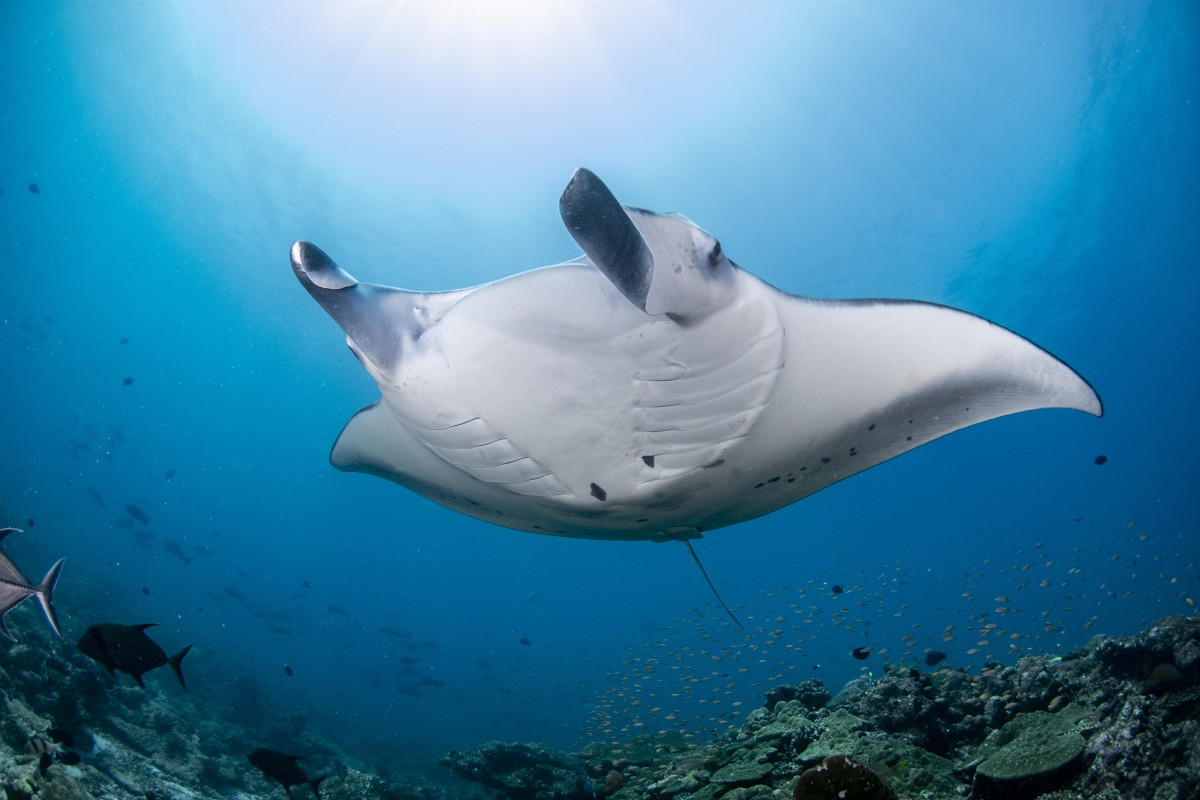
A cleaning station is an area where larger marine animals visit to have parasites removed by small cleaner fish. These are among the best places to encounter manta rays, which often hover almost motionless while being cleaned.
Drift Dive
Rather than swimming against the current, divers simply allow the water to carry them naturally along the reef or channel. It’s a relaxed way to cover more ground and experience some of the Maldives’ most spectacular underwater scenery.
Pelagic
Pelagic species are marine animals typically encountered in open water rather than close to the reef. In the Maldives, divers often use the term loosely to describe grey reef sharks, silky sharks, eagle rays, manta rays, whale sharks, tuna and occasionally hammerheads.
Emperor Maldives liveaboard itineraries combine these different environments to create varied diving throughout the week.
One day you might be drifting through a shark-filled kandu, the next exploring a colourful thila covered in soft corals, before finishing with a gentle manta encounter or a relaxing lagoon dive.
It’s this variety – combined with warm water, excellent visibility and an incredible abundance of marine life – that keeps divers returning to the Maldives year after year.
We would love to share our passion for diving in the Maldives with you. If you would like to book a trip on one of our Maldives liveaboards or have any questions about visiting the country, please get in touch by email on [email protected] or visit our website’s Maldives section to find out more
Frequently Asked Questions
Is a thila suitable for beginner divers?
Some are, but many experience stronger currents than beginners are used to. Your dive guide will always assess conditions and recommend suitable sites for your experience level.
Are all Maldives dives drift dives?
No. While drift diving is one of the highlights of the Maldives, many lagoon dives, reef dives and some thilas can be enjoyed with little or no current.
Why are currents stronger in the Maldives?
The Maldives’ geography creates narrow channels between atolls. As tides rise and fall, huge volumes of water are forced through these channels, creating the currents that make the diving so rich in marine life.
Which is better: a thila or a kandu?
Neither is better – they simply offer different experiences. Thilas are renowned for colourful reefs and abundant fish life, while kandus are famous for exhilarating drift dives and encounters with larger pelagic species.
Do I need experience before diving in the Maldives?
Many Maldives dive sites are suitable for recently qualified divers, while others are better suited to those with more experience due to stronger currents. Liveaboard itineraries usually include a variety of dive sites, and your guides will always brief you thoroughly before each dive.
